Home

About us | Newsroom | Contact us

Link
Request a safe & well visit

Suggested searches

Smoke alarms
Fire safety in my home
Water safety
Your Information (Privacy Notice)
Publication Scheme
  • Home
  • Incidents
  • Safety advice
  • Careers
  • Newsroom
  • About Us
    Back
    About Us
      • Who We Are
        Back
        Who We Are
        • Organisational Chart
        • Associated Groups
        • Executive Leadership Team
        • WYFRS Authority
        • Your information (privacy notice)
      • What We Do
        Back
        What We Do
        • Achievements
        • Consultation and Engagement
        • Diversity and Inclusion
        • Prevent, Protect, Respond
        • Special Service Calls
        • Statutory Duties
        • West Yorkshire Prepared
      • Access to Information
        Back
        Access to Information
        • Accessibility Statement
        • Data Protection
        • Data Transparency
        • Freedom of Information
        • People and Pay
        • Publication Scheme
  • Building Safety Portal
  • Young People
    Back
    Young People
      • Learning Resources
      • Youth Interventions
      • The King's Trust - Get Started Programmes
  • Contact us

Breadcrumb

  1. Home
  2. Safety advice

Cooking

Every year, West Yorkshire Fire and Rescue Service attends hundreds of kitchen fires. Most are preventable and are often caused by distractions, cooking being left unattended, people falling asleep or cooking while under the influence of alcohol, drugs or medication.

Kitchen fires are most common between 4pm and 10pm, when many people are preparing meals.

Share
X Facebook Linkedin Email
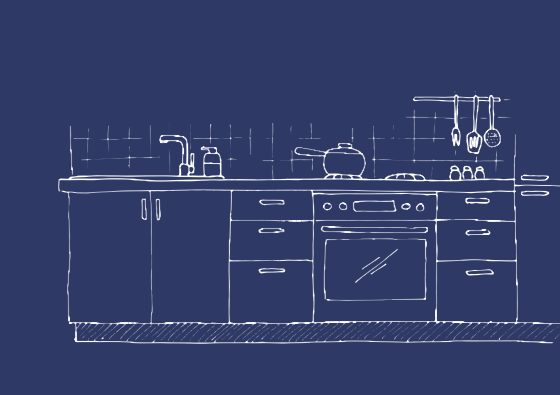
Kitchen Illustration

Whether you're making a quick snack or cooking for the family, following a few simple steps can help keep you, your loved ones and your home safe:

  • Never leave cooking unattended.
  • Avoid distractions. If you leave the room, turn off the heat.
  • Do not cook if you are tired or impaired by alcohol, drugs or medication.
  • Keep children and pets away from cooking appliances and hot surfaces.
  • Secure loose clothing, sleeves and headscarves. 
  • Turn pan handles inward to prevent them being knocked.
  • Keep electrical leads and appliances away from water.
  • Check appliances are switched off after use.
  • Have a working smoke detector on every level of your home. A heat detector is recommended for kitchens. 


Cooking with Oil Safely

Hot oil can ignite quickly. Consider safer alternatives, such as thermostatically controlled appliances, including deep fat fryers, which help regulate cooking temperatures and reduce the risk of overheating.

  • Never leave hot oil unattended.
  • Do not fill chip pans or frying pans more than one-third full.
  • Follow the manufacturer's filling instructions for deep fat fryers.
  • Make sure food is dry before placing it into hot oil. 
  • If oil begins to smoke, turn off the heat and allow it to cool.
  • Change cooking oil regularly.
  • Never store oil or chip pans inside an oven.


Using kitchen appliances safely

Kitchen appliances such as microwaves, air fryers, toasters, kettles, coffee machines, slow cookers, pressure cookers and other electrical cooking equipment can pose a fire risk if used incorrectly. 

  • Always follow the manufacturer's instructions and use appliances only for their intended purpose.
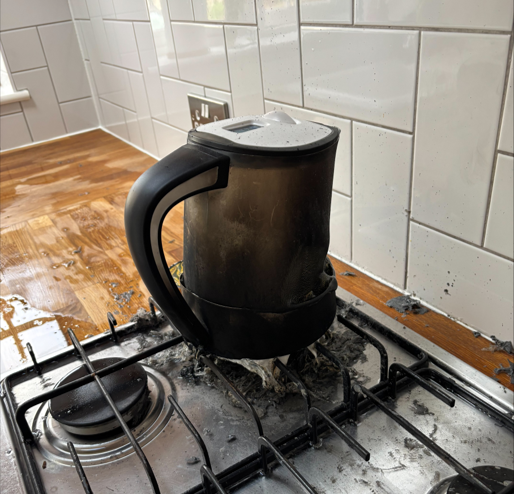
  • Never place appliances on a cooker hob, even when it is switched off. 
  • Keep appliances clear of cupboards, curtains, papers towels and other combustible materials.
  • Ensure extractor fans and cooker hoods are kept clean and free from grease build-up.
  • Use microwave-safe containers and packaging when using a microwave.
  • Never place metal, foil or items with metallic decoration in a microwave or toaster.
  • Do not overfill, overload or overheat appliances.
  • Never leave appliances unattended while in use.
  • If food begins to smoke, switch off the appliance.
  • Keep appliances clean and free from grease, crumbs and food debris.
  • Regularly check plugs, cables and appliances for signs of damage and stop using them if they appear faulty.
  • Avoid trailing cables where they could be pulled, trapped or damaged.
  • Register electrical products for safety recalls via registermyappliance.org.uk
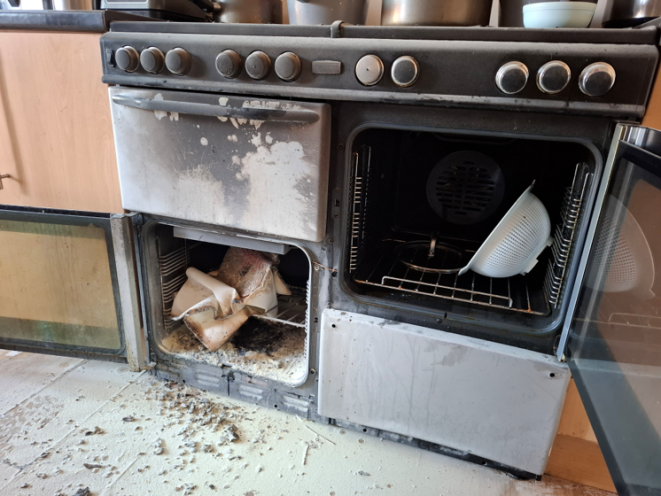
Aftermath of oven fire


Keep your cooking area clear 

Nothing on, nothing in, nothing near the cooker. Keeping cooking areas free from clutter reduces the risk of fire.

  • Keep hobs, ovens and grills clear of combustible materials.

  • Never use the cooker as a worktop or storage area.

  • Keep tea towels, kitchen roll, packaging and other combustible materials away from heat sources.

  • Keep worktops tidy and clutter-free.

  • Clean ovens, hobs, grills and extractor hood regularly to prevent grease build-up.


Kettle fire on hob

Heated wheat bag safety

When used incorrectly, heated wheat bags can cause burns and fires.

  • Follow the manufacturer's instructions for use. 
  • Do not exceed recommended heating time.
  • Allow wheat bags to cool between uses.
  • Check for signs of wear or damage before use and do not use if damaged.

Never try to tackle a fire yourself

People are often seriously injured when they:

  • Throw water onto burning oil.
  • Attempt to move a burning pan.
  • Try to extinguish the fire themselves.

Never use water on a cooking oil fire. Even a small amount of water can cause burning oil to erupt into a large fireball, resulting in severe burns and rapid fire spread. 

Watch our hot oil fire demonstration video

If a fire starts

Get out. Stay out. Call 999.

  1. Turn off the heat source; if it is safe to do so
  2. Leave the room, closing doors behind you if possible.
  3. Get everyone out of the property and stay out
  4. Call 999
  5. Do not re-enter until advised it is safe to do so

If your clothing catches fire 

Stop, Drop and Roll

  1. Stop moving 
  2. Drop to the ground
  3. Roll to put the fire out

Do not run. This will make the fire worse. If possible, smother the flames with a heavy material such as a coat or blanket.

  • A
  • B
  • C
  • D
  • E
  • F
  • G
  • H
  • I
  • J
  • K
  • L
  • M
  • N
  • O
  • P
  • Q
  • R
  • S
  • T
  • U
  • V
  • W
  • X
  • Y
  • Z

Main navigation

  • Home
  • Incidents
  • Safety advice
  • Careers
  • Newsroom
  • About Us
  • Building Safety Portal
  • Young People
  • Contact us

Translate the website

© 2026 West Yorkshire Fire And Rescue Service - All Rights Reserved

Footer bottom

  • Sitemap
  • Accessibility Statement
  • Facebook
  • X-twitter
  • Youtube
  • Instagram