
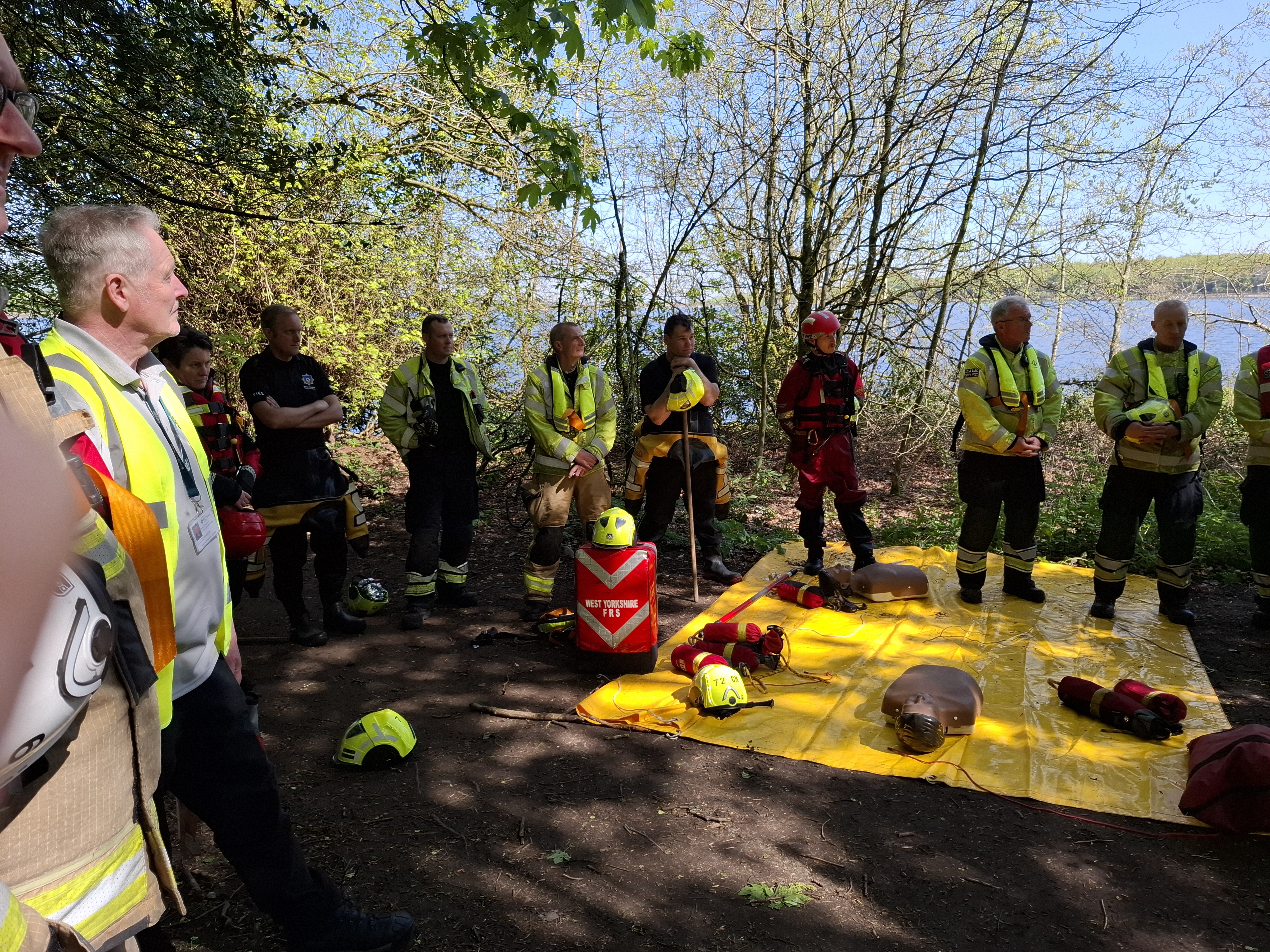
On Friday 1 May, emergency service partners took part in a planned water safety exercise at Blackmoorfoot Reservoir. The exercise strengthened operational working relationships while reinforcing vital safety messages as warmer weather tempts more people to open water locations.
Crews from Meltham, Slaithwaite and Rastrick used the session to practise safe and effective water rescue techniques, supported by colleagues from partner organisations. The exercise reflects the strong partnership working in place across West Yorkshire to ensure a consistent approach to water safety.
WYFRS continues to urge the public to keep safe around water by following key advice:
- Avoid swimming in open water such as reservoirs, rivers and canals.
- Water can be much colder than it looks, even in warm weather.
- Hidden hazards beneath the surface can cause serious injury.
- Alcohol and water are a dangerous combination.
- If you see someone in trouble, call 999 and ask for the fire service. Tell them to float on their back and throw them rescue equipment. Do not enter the water yourself.
Water Safety lead for WYFRS Chris Bell says “We see first-hand how quickly an enjoyable day near water can turn into a life-threatening situation. Exercises like this are vital for refreshing our water rescue techniques, but just as importantly they help us remind people that reservoirs, rivers and canals are not safe places to swim. By working closely with our partners, we can share clear advice and hopefully prevent incidents before they happen.”
Operational teams from Yorkshire Water were on hand on the day to ensure strict health and safety protocols were in place. The utility does not advocate swimming in any of its reservoirs because of the dangers of extreme cold and hidden machinery beneath the surface of the water.
Alastair Harvey, lead countryside and woodland advisor, said: “Swimming and unauthorised water sports are not permitted at our reservoirs as they can pose a risk to life through cold water shock, operational equipment under the water, hidden currents and other dangers.
“Sadly, we have experienced open water deaths and emergency rescues in the past, often involving people who did not intend to enter the water. That is why it is so important for us to take part in training exercises like this, so that we can work with our emergency and rescue services and stakeholder partners, to be as prepared as possible for such an incident occurring in the future.”
For more water safety advice, visit www.westyorksfire.gov.uk/water


